
Hybrid Switchgear: The Best of Both Worlds for Modern Substations (A Comprehensive Guide)


The demands on modern electrical power grids are more intense than ever before. Urbanization is shrinking the available space for new substations, aging infrastructure requires reliable and efficient upgrades, and the rapid integration of renewable energy sources necessitates faster, more flexible grid connections. In this challenging landscape, substation engineers and utility planners are constantly seeking solutions that balance performance, footprint, reliability, and cost.
For decades, the choice for medium-voltage and high-voltage switchgear has been a tale of two technologies: the sprawling, cost-effective Air-Insulated Switchgear (AIS) and the compact, premium Gas-Insulated Switchgear (GIS). Each offers a distinct set of advantages and compromises. But what if there was a third way? An engineered solution that strategically combines the best attributes of both?
Enter Hybrid Switchgear. This innovative technology represents an intelligent evolution in substation design, bridging the gap between AIS and GIS to offer a compelling, cost-effective, and highly reliable alternative for a wide range of applications.
This comprehensive guide will provide a deep technical dive into hybrid switchgear. We will explore its fundamental design principles, break down its core components, offer a clear comparison against traditional technologies, and outline the key applications where it delivers maximum value.
What is Hybrid Switchgear?
Hybrid switchgear is a compact switchgear assembly that strategically combines elements of both traditional Air-Insulated Switchgear (AIS) and modern Gas-Insulated Switchgear (GIS) technology within a single, modular unit.
The core principle of the hybrid design is simple yet powerful: enclose the most critical, active components of a switchgear bay—such as the circuit breaker, disconnector, and earthing switch—within a sealed, gas-filled tank. This is the GIS element. The external connections, primarily the busbars, remain insulated by the surrounding air. This is the AIS element.
Think of it as placing the critical, high-maintenance "engine" of the switchgear inside a protected, hermetically sealed housing, while leaving the simpler "chassis" and connections open to the air for easy access and integration. This approach effectively isolates the parts most sensitive to environmental factors, drastically increasing reliability while maintaining a high degree of flexibility.
To truly understand the value proposition of hybrid technology, it is essential to compare it directly with the two conventional options. The choice between them is a critical engineering decision based on a trade-off between space, cost, and operational requirements.
Parameter | Air-Insulated Switchgear (AIS) | Gas-Insulated Switchgear (GIS) | Hybrid Switchgear |
Footprint / Space | Very Large | Very Small (up to 90% smaller than AIS) | Small / Compact (up to 70% smaller than AIS) |
Insulation Medium | Atmospheric Air | SF₆ or Alternative Eco-efficient Gas | Combination of Gas (for core parts) and Air (for busbars) |
Initial Cost | Low | High | Medium (significantly cheaper than full GIS) |
Installation Time | Long (requires extensive on-site assembly of individual components) | Medium (factory-assembled bays, but requires complex bus duct connections) | Short (pre-fabricated, pre-tested modules arrive ready for "plug-and-play" installation) |
Maintenance | High (regular cleaning of insulators, checks on exposed mechanisms) | Low (all components are sealed from the environment) | Very Low (critical components are sealed and maintenance-free) |
Reliability | Good, but susceptible to environmental factors (pollution, moisture, wildlife) | Very High (fully protected from all external influences) | Very High (all active switching components are fully protected) |
Flexibility | High (easy to modify, extend, and connect) | Low (rigid gas-insulated bus ducts make extensions complex) | High (air-insulated busbars allow for easy, direct connection to existing AIS infrastructure) |
As the comparison shows, hybrid switchgear occupies a strategic "sweet spot." It delivers the high reliability and small footprint benefits approaching that of GIS, but with a more moderate cost and the flexibility of AIS, making it an optimal solution for many modern projects.
Anatomy of Hybrid Switchgear
A hybrid switchgear module is a masterpiece of compact engineering. Several distinct functions, which would require separate pieces of equipment in an AIS setup, are integrated into a single gas-insulated enclosure.
The Enclosure (Gas Tank): This is the sealed housing, typically fabricated from welded steel or aluminum plates, designed to contain the insulating gas under pressure for the entire lifespan of the equipment. The gas is most commonly SF₆, but the industry is rapidly moving towards eco-friendly alternatives like g³ (Green Gas for Grid) or dry air/N₂ mixtures to reduce environmental impact.
The Circuit Breaker (CB): As the most critical component, the integrated circuit breaker is responsible for interrupting normal load currents and, more importantly, massive short-circuit fault currents. Modern hybrid modules often feature a "dead tank" design, where the interrupter is housed within a grounded metal enclosure, significantly enhancing personnel safety compared to the "live tank" designs of some AIS breakers.
The Disconnector (Isolator): Integrated into the same tank is the disconnector switch. Its purpose is to provide a clear, visible point of electrical isolation to ensure a circuit is safely de-energized before any maintenance work can begin.
The Earthing Switch: This is a vital safety component. After a circuit is disconnected, the earthing switch is closed to ground the circuit, dissipating any trapped electrical charge and protecting personnel from accidental energization. High-speed earthing switches can also be included to provide making capacity for added safety.
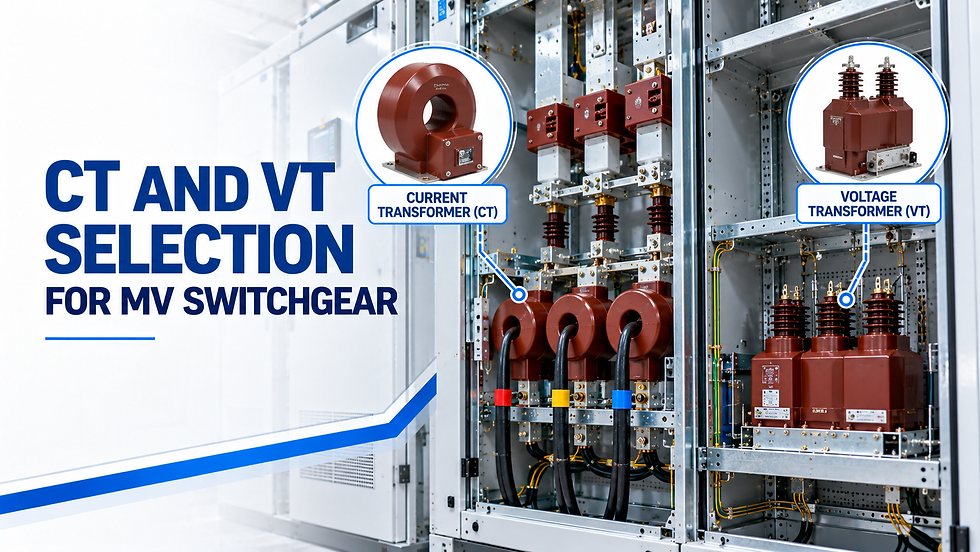
Instrument Transformers (CTs & VTs): Traditionally, Current Transformers (CTs) and Voltage Transformers (VTs) are separate, standalone pieces of equipment in a substation. In a hybrid module, these devices for measurement and protection are often cleverly integrated directly into the assembly, either inside the gas tank or mounted on the exterior, further reducing space and installation complexity.
Bushings: High-quality bushings provide the interface between the gas-insulated components inside the tank and the air-insulated busbars outside. These are typically made of composite polymer or traditional porcelain, with their length and creepage distance designed according to the system voltage and environmental pollution levels.
The Compelling Advantages of Adopting Hybrid Switchgear
The engineered integration of these components delivers a powerful set of benefits that directly address the challenges of modern grid development.
1, Significant Space Savings
This is often the primary driver for choosing hybrid switchgear. By compacting the entire switching bay, it can reduce the substation footprint by up to 70% compared to a traditional AIS solution. This is invaluable for building new substations in dense urban areas or for adding new feeder bays to an existing substation with no available land for expansion.
2, Enhanced Reliability and Safety
Enclosing all active and moving parts (breaker interrupters, switch contacts) in a sealed, controlled environment protects them from degradation due to environmental factors like moisture, salinity, industrial pollution, and wildlife. This drastically reduces the likelihood of faults and minimizes maintenance requirements. The grounded "dead tank" design also provides a superior level of safety for personnel.
3, Reduced Installation and Commissioning Time
Hybrid modules are fully assembled and tested in a controlled factory environment. They arrive on-site as a complete "plug-and-play" unit. This eliminates a significant amount of complex, time-consuming, and weather-dependent on-site construction work, dramatically shortening project timelines and reducing associated labor costs.
4, Lower Lifecycle Costs
While the initial capital expenditure for hybrid switchgear is higher than for AIS, its Total Cost of Ownership (TCO) is often significantly lower. This is due to the drastically reduced maintenance needs (no regular cleaning of live-part insulators, no mechanism adjustments), higher reliability (fewer unplanned outages), and faster installation.
5, Seamless Integration and Flexibility
Because hybrid switchgear uses standard air-insulated bushings for its external connections, it can be easily and directly connected to existing AIS busbars. This makes it an ideal solution for retrofitting, extending, or upgrading existing AIS substations without requiring a complete and costly switch to a full GIS design.
Where Does Hybrid Switchgear Shine?
The unique combination of compactness, reliability, and flexibility makes hybrid switchgear the ideal choice for a variety of critical applications:
Urban and Industrial Substation Upgrades: The perfect solution for replacing aging AIS equipment in inner-city substations where land is extremely expensive or simply unavailable for expansion.
Renewable Energy Grid Connections: For connecting wind and solar farms to the grid, where fast deployment schedules, high reliability in potentially remote locations, and a compact footprint are key project drivers.
Containerized and Mobile Substations: The compact, modular nature of hybrid switchgear makes it the core component for building complete, transportable E-House substations for temporary power, emergency deployment, or mining operations.
Critical Infrastructure: Powering essential services like railways, data centers, large hospitals, and continuous-process industrial plants where space is at a premium and the cost of an outage is extremely high.
Substations in Harsh Environments: In locations with high levels of industrial pollution, coastal salt spray, or extreme weather conditions, the sealed enclosure of the hybrid module provides superior long-term performance and reliability compared to exposed AIS components.
Conclusion
Hybrid switchgear is no longer a niche technology; it is a mature, proven, and intelligent engineering solution that offers a strategic and often optimal balance of performance, footprint, reliability, and lifecycle cost.
It successfully addresses the shortcomings of both AIS and GIS by delivering GIS-level reliability and compactness where it matters most—on the active components—while retaining the AIS-level flexibility and cost-effectiveness for system integration.
As our global power grids continue to evolve and face new challenges, the need for smarter, more efficient, and more reliable substation solutions will only intensify.
Hybrid switchgear stands ready as a key enabling technology, representing the future of modern and sustainable electrical infrastructure. For your next substation project, a thorough evaluation of the strategic advantages that a hybrid solution can deliver is not just an option—it is an engineering imperative.


Comments